The counter has always been the front line of hospitality and retail. It is where a hungry customer decides whether ordering feels effortless or exhausting, and where an operator either captures a sale or loses it to the queue behind. For decades that counter looked the same: a person, a till, and a line of patience running out. Today it is being quietly rebuilt in software. Self-ordering kiosks, mobile ordering, and connected drive-thru technology are turning the moment of purchase into something faster, more accurate, and far more profitable than the old cash-register model ever allowed.
This shift is not confined to global fast-food giants. Independent cafes, regional restaurant chains, and multi-outlet retailers are adopting the same tools because the maths has become impossible to ignore. Digital ordering lifts average spend, trims labour pressure at peak hours, and captures data that paper tickets never could. This article walks through how self-service and smart ordering technology work together, why they change the economics of a busy outlet, and what operators should think about before installing them.
From a person at a till to a screen in the hand
The core idea behind self-service ordering is simple: let customers do the part of the transaction they are perfectly capable of doing themselves. A well-designed kiosk or app presents the full menu clearly, suggests add-ons at exactly the right moment, and sends the order straight to the kitchen without a staff member acting as a translator. The customer controls the pace, reads every option, and never feels rushed by a growing line behind them. Meanwhile the outlet frees up its people to cook, expedite, and handle the interactions that genuinely need a human touch.
Why average order value climbs
One of the most consistent findings across the industry is that people spend more when they order from a screen. There are a few reasons. A kiosk never forgets to suggest a side, a drink, or a dessert, and it does so without the social awkwardness that stops staff from upselling on a busy shift. Customers browsing at their own speed are also more likely to explore the menu and add items they would have skipped when hurried. Photographs, combo prompts, and one-tap add-ons all nudge the basket upward gently. For an operator, even a modest lift in average ticket size compounds across thousands of daily orders into a meaningful revenue change.
The drive-thru gets an upgrade
Nowhere is speed more valuable than at the drive-thru window, where every extra second in the lane translates into cars turned away during the lunch rush. Modern systems bring digital menu boards that update in real time, order-confirmation screens that cut mistakes, and back-end timing that shows managers exactly where the lane slows down. Some setups even split ordering and payment across multiple points so vehicles keep moving. The result is a lane that handles more cars per hour with fewer errors, which is the single biggest lever a drive-thru operator has.
Operators evaluating a full self-service stack often start by reviewing purpose-built products such as Hampster Plus, which bundles kiosk ordering, kitchen display, and management reporting into a single connected platform.
Accuracy that customers actually notice
Order errors are expensive in a way that rarely shows up on a single receipt but adds up ruthlessly over a year. A wrong order means wasted food, a remake, a delayed queue, and a customer who leaves less likely to return. When the guest enters their own choices — no onions, extra sauce, a specific size — the instruction travels to the kitchen exactly as intended, with no mishearing across a noisy counter. Fewer mistakes mean lower waste, faster service, and a reputation for getting it right, which in the long run is worth more than any promotion.
Managing the flow behind the scenes
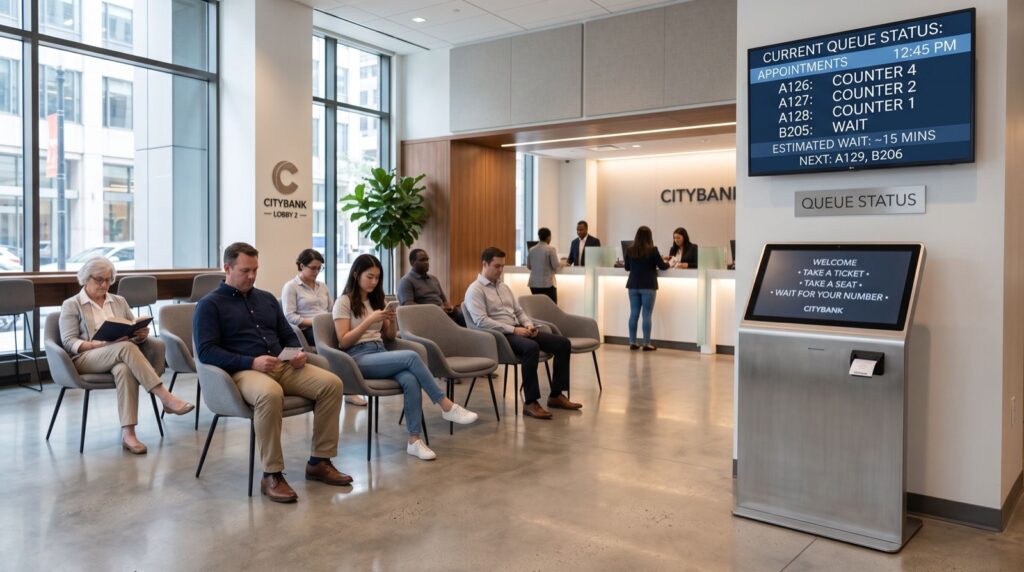
Self-ordering only delivers its full value when the kitchen and floor can keep pace with the orders coming in. That is why the best deployments pair front-end ordering with tools that manage demand and pacing. Kitchen display systems replace paper tickets with prioritised digital tickets, while flow-management technology smooths out the surges so the kitchen is never buried and then idle. Retail and hospitality venues that already run a queue management system in pakistan find that the same logic of orderly, data-driven flow extends naturally from the waiting line to the order pipeline.
The data dividend
Every digital order is also a record. Over weeks and months, that record becomes one of the most valuable assets an outlet owns. Operators can see which items sell together, which times of day drive volume, which promotions actually moved the needle, and which menu choices are quietly ignored. That insight informs smarter menu engineering, sharper staffing, and marketing that speaks to real behaviour rather than guesswork. Paper tickets and a manual till simply cannot generate this picture, which is why data is often the feature that converts a sceptical operator after the first busy month.
Practical questions before you buy
Before signing with any provider, an operator should press on a handful of practical points that determine whether the system thrives or gathers dust. The first is integration: does it work cleanly with your existing point-of-sale and payment providers, or will it force a disruptive rip-and-replace? The second is usability, because an interface that confuses first-time or older customers will slow the line rather than speed it. It is also worth confirming that menus, pricing, and promotions can be updated quickly and centrally across every outlet, since a chain that has to edit each screen by hand will never keep them consistent.
Resilience matters just as much. Ask what happens during an internet or hardware outage and whether there is a manual fallback so service never stops entirely. Probe whether the platform offers genuine reporting or merely takes orders, as the data is often where the long-term value hides. Finally, weigh the level of installation, training, and ongoing support on offer, because a self-service system is a daily operational dependency, not a one-off purchase.
People still matter
It is a mistake to see self-service as a way to strip humans out of hospitality. The most successful outlets redeploy staff rather than remove them, moving people from repetitive order-taking to food quality, table service, and problem-solving. Customers who hit a snag at a kiosk still want a friendly face nearby, and a warm greeting at the door still shapes the visit. Technology handles the mechanical, repeatable parts of the transaction so the human parts can be done better. Choosing trusted professionals to install, tune, and support the system is what keeps that balance working smoothly in daily operation.
Key Takeaways
- Self-ordering kiosks and apps let customers control the transaction, freeing staff for higher-value work.
- Digital ordering consistently raises average spend through calm, well-timed prompts and menu exploration.
- Connected drive-thru technology moves more cars per hour with fewer errors.
- Customer-entered orders cut mistakes, waste, and remakes that quietly erode margins.
- Pairing ordering with kitchen display and flow management keeps the operation from bottlenecking.
- The order data itself becomes a durable asset for menu, staffing, and marketing decisions.
Where this is heading
The direction of travel is clear. Ordering is becoming something customers do on their own terms, through a screen, a phone, or a voice prompt, while staff focus on the craft and care that no machine can replicate. Operators who treat this as a wholesale technology upgrade — front counter, drive-thru, kitchen, and reporting working as one connected system — will run faster, more accurate, and more profitable outlets than those clinging to the single-till counter. The tools are mature, the returns are measurable, and the customers, already used to ordering everything else from a screen, are more than ready.